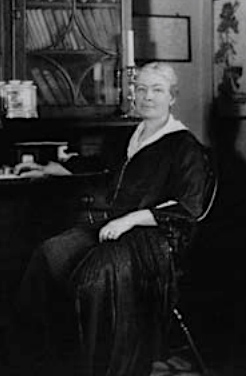
The gardens that line some of Lake Forest and Lake Bluff's most storied estates owe their structure to a woman who picked up a drafting pencil at 42 and never stopped drawing.
Ellen Biddle Shipman (1869–1950) designed more than 650 gardens across the country, including more than a dozen in Lake Forest alone, according to a new feature by Carol Summerfield published July 19 on lakeforestlove.com. Summerfield, who also serves as executive director of the History Center of Lake Forest-Lake Bluff, is leading an effort to catalog Shipman's local work and collect her original drawings.
House and Garden magazine named Shipman the "Dean of Women Landscape Architects" in 1933, recognizing both her prolific output and her role training the next generation of women designers. She opened a New York City office in 1920 and hired almost exclusively female graduates of the Lowthorpe School of Landscape Architecture, one of the few colleges that admitted women at the time, according to the National Park Service.
"Before women took hold of the profession, landscape architects were doing what I call cemetery work," Shipman told The New York Times in 1938.
Her most prominent local commission was the walled garden at Crab Tree Farm in Lake Bluff, designed around 1926–27 in collaboration with architect David Adler for William McCormick Blair and Helen Bowen Blair. Shipman positioned the garden on the west-facing side of the house to shelter delicate plantings from Lake Michigan winds, Summerfield wrote. The Blair estate, known as "Port O'Call," sits on 11 acres overlooking the lake. The Crab Tree Farm Collections archive describes it as the last operating farm on Lake Michigan in Illinois.
Other documented Lake Forest commissions include the Edward Shumway garden at 735 Westminster, featuring her hallmark brick walkways and walled enclosures; the "Little Orchard" walled garden for the Spaulding family, identified in the History Center's online exhibit; and the Wheeler Estate garden, designed in 1930 for Leslie and Rhoda Patten Wheeler with a formal walled space opening to lakeside views.
Shipman's signature style combined rectangular beds, axial paths, and a central sundial or fountain enclosed by evergreens, according to The Cultural Landscape Foundation. She described her approach as painting the landscape with plants, treating planting "as a painter would."
Most of her original planting schemes have evolved or vanished over the past century because of the labor-intensive upkeep they required, Summerfield noted. But residents can still experience her aesthetic at the Ellen and Tom Walvoord Courtyard Garden at the History Center, 509 E. Deerpath in Lake Forest. The garden, designed in the style of a 1920s Shipman commission, is free and open sunrise to sunset, with informational panels on the evolution of landscape design.
The History Center is open Tuesday through Friday, 10 a.m. to 4 p.m., and Saturday through Sunday, 1 to 4 p.m.
Summerfield's center is actively working to index all of Shipman's local projects, many of which remain unlisted in her known portfolio. Residents with images, drawings, or materials related to Shipman's work can contact the History Center at [email protected].