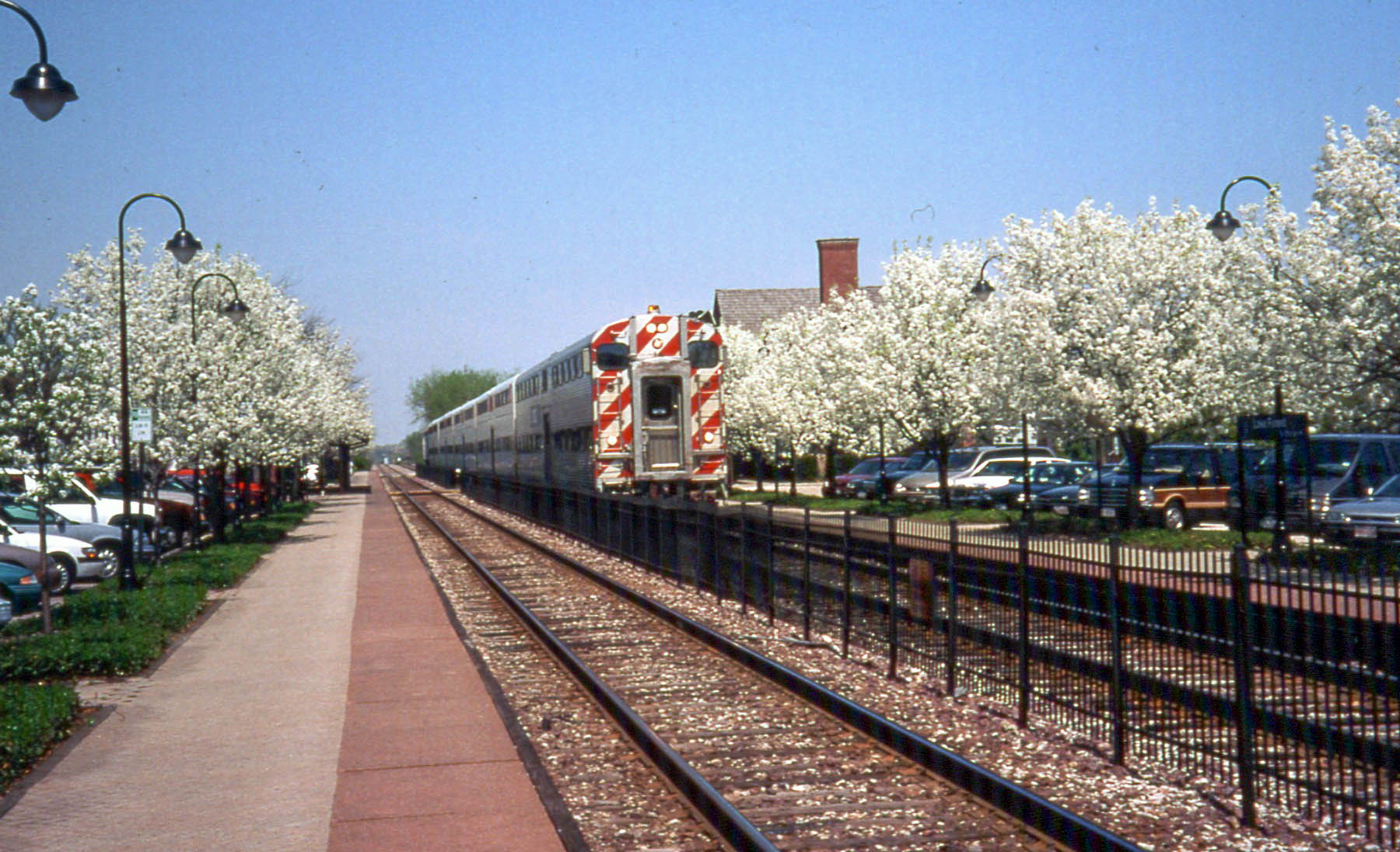
Lake Forest and Lake Bluff commuters who ride Metra's Union Pacific North line to Chicago will see a major change in regional transit governance starting Sept. 1, when the Northern Illinois Transit Authority replaces the Regional Transportation Authority as the agency overseeing Metra, Pace and the CTA.
The transition comes under the 2025 Northern Illinois Transit Authority Act, which creates a 20-member NITA board with broader authority over the region's transit system. The law also changes how the boards of Metra, Pace and the CTA are appointed and creates more overlap between the regional authority and the individual transit agencies.
For Metra, the new 11-member board will be appointed by the governor, Chicago mayor, Cook County Board president and the five collar-county board chairs. The governor will appoint one Metra director, the Chicago mayor two, the Cook County Board president three and the five collar-county leaders one each.
Six new directors are expected to join Metra's 11-member board in September. Five have been identified: former Federal Railroad Administration chief Joe Szabo of Chicago, economic development leader Diane Williams of Orland Park, RTA Director for DuPage and union executive John Retondo, attorney and RTA director Dennis Mondero, and former Woodstock Mayor Brian Sager. Gov. JB Pritzker had not announced his Metra pick as of Aug. 17.
At Metra's Aug. 12 board meeting, six outgoing directors gave farewell remarks as the agency prepared for the transition. Among them was board chair Joseph McMahon, who acknowledged the uncertainty surrounding the legislation and its effects on Metra, employees and riders.
"Change is difficult and there's been a lot of uncertainty about the legislation (and) what's going to happen to Metra plus the impact on employees and riders," McMahon said. "This board has really been a steady hand, providing guidance and civility."
Lake County gets a seat at both levels
Lake County has already selected its representative for the new regional authority and Metra's commuter rail board.
Lake County Board Chair Sandy Hart appointed Gary Gordon of Lincolnshire to the NITA board in June. Gordon will also serve on the Commuter Rail Board, which oversees Metra operations through authority delegated by NITA.
That means Lake County will have a representative in the new regional governance structure as well as on the board directly overseeing Metra's commuter rail operations.
Gordon is geographically close to Lake Forest and Lake Bluff, both of which are served by Metra's UP North line.
What the NITA Act changes
The legislation creates a 20-member NITA board. Five members are appointed by the governor, five by the Chicago mayor, five by the Cook County Board president and one by each of the five collar-county board chairs or executives: DuPage, Kane, Lake, McHenry and Will counties.
NITA has broader regional responsibilities than the RTA, including authority to coordinate service among Metra, CTA and Pace and establish a universal fare system. The goal is to create a more integrated regional transit network rather than having the three service boards operate as largely separate systems.
The law also provides roughly $1.5 billion in annual funding for the Chicago-area transit system. The package relies on a combination of increased regional sales-tax revenue and redirected state transportation revenue.
The transit agencies had faced a projected $230 million funding shortfall in 2026, which was expected to grow to $834 million in 2027 without additional funding. Officials had warned that the gap could eventually force service reductions of as much as 40%.
What riders can expect
For commuters boarding at Lake Forest and Lake Bluff, the Sept. 1 change is primarily a governance shift. It does not itself change the UP North timetable or the trains serving those stations.
The new leadership structure, however, will inherit major decisions about Metra's future, including a long-delayed railcar replacement program.
Metra ordered 200 new railcars from Alstom in 2021. Deliveries were originally expected to begin in 2024, but technical and design issues have pushed the first cars to late 2026, with full-scale delivery expected from 2027 through 2029.
Outgoing Metra director Stephen Palmer of La Grange cited the railcar purchase as one of the defining decisions of his tenure.
"My dying request in leaving Metra would be — please invite me back when those cars get put into service," Palmer said at the Aug. 12 meeting.
Five current directors are expected to remain on the Metra board alongside the six incoming members: McMahon, former chair Romayne Brown of Dolton, Christian Diaz of Chicago, Gordon of Lincolnshire and Brian Shanahan of Mokena.
The new NITA structure takes effect Sept. 1.